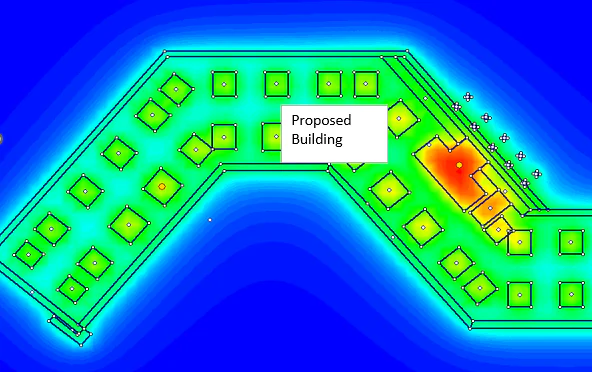
Settlement analysis is the process of estimating how much and how quickly the ground beneath a structure will compress under load. It’s a critical part of geotechnical design especially in regions like British Columbia, where soil conditions range from dense glacial till to soft marine clays and organic silts.
There are three primary types of settlement:
- Immediate Settlement: Occurs right after loading due to elastic deformation of dry or granular soils
- Consolidation Settlement: Happens over time as pore water pressure dissipates in saturated fine-grained soils, leading to gradual compression
- Secondary Settlement: Long-term deformation due to soil creep, typically in organic or highly compressible soils
Key factors influencing settlement include:
- Soil compressibility and permeability
- Groundwater conditions and seasonal fluctuations
- Structural loading magnitude and duration
- Preloading, surcharging, or past fill placement
DMC use laboratory testing (e.g. oedometer tests), field data (e.g. CPT, boreholes), and analytical models (e.g. Terzaghi’s theory) to estimate total and differential settlement. The goal is to ensure that movements stay within tolerable limits thus avoiding issues like cracking, tilting, or serviceability loss.
In BC, where seismic activity and variable terrain add complexity, settlement analysis often informs both foundation selection and long-term monitoring strategies. It’s not just about predicting movement. It’s about designing with confidence in what lies below.